


What Is a Rushnyk? The Sacred Cloth of Ukrainian Tradition
A rushnyk is a Ukrainian ritual cloth, usually long and narrow, decorated with embroidery or woven designs. The word is related to the word "hand," but a rushnyk is not simply an everyday towel. It is a sacred textile used to bless, protect, honor, bind, welcome, remember, and mark life’s major transitions.
Rushnyky appear at the pokut’ (home altar), around holy images, beneath bread, at weddings, beside newborns, during funerals, on journeys, and in family ceremonies. The cloth becomes a pathway carrying symbols, memory, and blessing across generations.
What Does a Rushnyk Look Like?
Traditional rushnyky are made from linen, hemp, or, in more recent years, cotton and decorated primarily at both ends, while the central section may remain unembellished. Red, black, white, blue, and other colors appear according to region and purpose.
Designs include trees, flowers, birds, lozenges, stars, crosses, meanders, grapes, kalyna berries, oak leaves, and other geometric protective symbols.

Why Are the Ends Decorated?
The two ends can represent two families, two worlds, the living and the dead, or the beginning and completion of a journey. The unembellished center may function as the path between them.
During a wedding, the couple stands on or is joined by the cloth. At an altar, the ends frame a sacred image. The rushnyk’s long shape is symbolic for connecting and creating boundaries at the same time.

The Rushnyk at the Pokut’
The finest household rushnyk is usually draped around the primary image at the sacred corner. It dresses and honors the image while creating a protective frame.
The cloth signals that the object is not ordinary decoration. It belongs to a living spiritual relationship within the home.

Bread and Salt on a Rushnyk
Bread and salt are traditionally presented on an embroidered rushnyk to welcome honored guests, newlyweds, dignitaries, or people returning home.
Bread represents nourishment, prosperity, and hospitality. Salt protects and preserves. The rushnyk beneath them carries the family’s blessing and identity.
Wedding Rushnyky
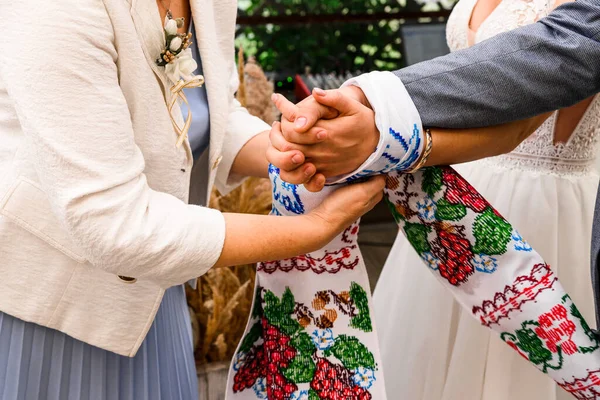
Several rushnyky may appear in a traditional wedding. One is used beneath the couple’s feet, another may bind the couple's hands in a ritual similar to handfasting, and others decorate icons or hold ceremonial bread.
The designs are chosen carefully because the cloth becomes a foundation for the marriage. Paired birds, the Tree of Life, flowers, stars, and geometric forms can bless love, fertility, harmony, prosperity, and continuity.
Birth and Childhood
A rushnyk can welcome a newborn into the family, protect a cradle, or accompany naming and baptismal customs. The cloth symbolically introduces the child to the ancestral line and household guardians.
Family textiles may later be passed to the child, linking early blessing with adult life.

Funeral and Memorial Uses
Rushnyky also accompany the dead. They may be placed on top of the casket, used with icons, tied to memorial crosses, or displayed during mourning.
The same cloth form that welcomes a child and joins a marriage also marks the final journey. This gives the rushnyk a complete relationship with the human life cycle.
Protective Symbols
Embroidery on a rushnyk can include:
- Tree of Life: ancestry, growth, and connection between worlds.
- Rhombs: fertile earth, fields, prosperity, and creation.
- Stars and rosettes: cosmic order, sunlight, and blessing.
- Birds: love, souls, messages, and family harmony.
- Meanders: continuity and protection through an endless path.
- Crosses: balance, directions, and spiritual order.
The complete composition matters more than any isolated symbol.
Who Makes the Rushnyk?
Traditionally, women embroider rushnyky for their households, daughters, weddings, and future ceremonies. The maker’s emotional state and intention are considered part of the cloth.
Every stitch requires time. The finished textile therefore stores intention in a way that mass-produced decoration cannot fully reproduce.
Can You Buy a Rushnyk?
Yes, especially from a Ukrainian maker or cultural organization. Ask about the region, materials, symbolism, and whether the cloth was intended for ritual, display, or ordinary use.
A printed imitation may be attractive, but it does not carry the same handwork or construction as an embroidered or woven rushnyk.

Respectful Modern Use
Use the cloth cleanly and intentionally. Do not place sacred rushnyky on the floor except where a specific ceremony calls for it. Avoid cutting an heirloom into craft pieces or using it as a casual dish towel.
If you are learning to embroider, begin with a small cloth and a few well-researched symbols rather than copying a complex ceremonial design without understanding it.
How to Care for a Rushnyk
Store it clean, dry, and protected from insects and direct sunlight. Hand washing may be appropriate for modern sturdy cloth, but antique dyes and fibers can be fragile. Seek textile-conservation advice for valuable heirlooms.
Record who made the cloth, where it came from, and what ceremonies it witnessed. The story is part of the inheritance.

A Path Made of Thread
The rushnyk teaches that fabric can become a road. It carries bread to a guest, joins two people, is a pathway for the ancestors, welcomes a child, and accompanies the dead. The cloth holds the family’s movement through time.
For Madame Pamita’s complete teachings on rushnyky, vyshyvanka symbolism, sacred stitching, and Ukrainian textile magic, read Baba Yaga’s Book of Witchcraft.

0 comments